
Start with the full guide: the 12 best suburbs in Brisbane for a forever home, with current prices, a map of what we have bought in each, and the schools. This article covers how to choose by budget and lifestyle.
Start with the full guide: the 12 best suburbs in Brisbane for a forever home, with current prices, a map of what we have bought in each, and the schools. This article covers how to choose by budget and lifestyle.
We often see buyers fall in love with Brisbane, then feel lost when it comes to choosing where to live. The city feels familiar yet unpredictable, with every suburb offering something different.
Prices, schools, and commute times change quickly, and what looks perfect online can feel completely different in person.
At Hunter Gather, we understand how overwhelming that can be. Brisbane’s market is full of momentum, with strong demand, limited supply, and constant competition between buyers.
Lifestyle appeal keeps the city growing, but knowing which areas hold lasting value takes local knowledge and a clear strategy.
This guide is here to help you make sense of it all. We’ll walk you through how to choose the right suburb by lifestyle, budget, transport, and growth potential, built on Hunter Gather’s on-ground experience across Brisbane.
Start by defining your priorities, then explore the suburb insights that follow. By the end, you’ll see how to find your place in Brisbane with confidence and clarity.
Brisbane Property Market Trends 2025
Brisbane has become one of Australia’s most closely watched property markets. Its mix of affordability, lifestyle, and steady growth has drawn attention from both local and interstate buyers looking for long-term value.
Understanding these trends reveals why the city remains a standout choice for home ownership and investment.
Population Growth and Migration Trends
Brisbane’s population has surged in recent years, driven by interstate movers and returning overseas residents. Many come for affordability, warmer weather, and stronger job prospects in technology, healthcare, and construction.
This steady migration underpins housing demand across both established inner suburbs and new growth corridors.
Brisbane Property Market Snapshot
Median house prices have risen consistently over the past five years, supported by low stock levels and healthy competition between buyers.
Unit prices, once slower to move, are catching up as affordability tightens and rental yields strengthen.
Compared with Sydney and Melbourne, Brisbane remains accessible, positioning it for further growth through 2025 and beyond.
Major Infrastructure and Development Projects
Key transport and lifestyle projects are shaping Brisbane’s future.
- Cross River Rail: linking key employment zones and easing city congestion.
- Brisbane Metro: improving travel between inner and middle-ring suburbs.
- Olympic precinct and new schools, hospitals, and green upgrades: boosting local amenity and long-term value.
These projects are improving liveability and reinforcing the city’s position as a leading market for sustained capital growth.
What Drives Suburb Value in Brisbane
Certain elements consistently separate high-performing suburbs from the rest:
- Access to quality schools and universities
- Reliable public transport and proximity to major employment hubs
- Lifestyle features such as parks, river access, or village-style centres
- Strong community appeal and limited new supply
- Awareness of risks such as flooding, aircraft noise, and overdevelopment
At Hunter Gather, we study these factors closely to help buyers find suburbs that balance liveability with growth potential, combining smart investment strategy with local understanding.
How to Choose the Right Brisbane Suburb
Choosing where to buy in Brisbane starts with clarity. Every suburb tells a different story, from price and lifestyle to access and future potential.
The key is matching those details to what matters most for you as a buyer. These seven factors form the foundation of every smart suburb search we guide clients through.
1. Commute and Transport Access
Brisbane’s geography and road layout make transport a crucial factor. Suburbs close to train lines, busway hubs, and major motorways hold strong appeal, especially for professionals travelling to the CBD or key employment zones.
Proximity to new infrastructure, like Cross River Rail or Brisbane Metro, can lift long-term value as connectivity improves.
2. School Zones and Education Options
For families, school catchments often decide suburb choice before anything else. Popular state and private schools create pockets of competition, lifting demand and pushing prices above neighbouring areas.
Quality childcare and access to tertiary education further enhance liveability and future resale appeal.
3. Amenities and Lifestyle
Suburbs with strong community infrastructure attract consistent interest from home buyers. Local parks, cafés, shopping centres, and weekend markets all add value beyond the property itself.
Walkability, access to healthcare, and safe recreational spaces are signs of a balanced and established neighbourhood.
4. Future Infrastructure and Growth Corridors
Growth follows progress. When major transport routes, town centres, or employment hubs expand, nearby suburbs often benefit from early capital gains.
Tracking government and council plans reveals where development is heading next, allowing buyers to enter markets before prices accelerate.
5. Property Type and Density
Every suburb has a housing identity. Inner areas favour character homes and boutique apartments, while middle and outer rings mix detached houses with new townhouse estates.
Density affects privacy, traffic, and future value, so understanding a suburb’s planning profile helps buyers choose the right property type for their goals.
6. Affordability and Value
Comparing median prices across suburbs provides a snapshot, but the true value lies in future performance.
Hunter Gather reviews price history, local supply, and market sentiment to identify areas where growth potential outweighs current cost. Balanced suburbs with strong fundamentals often outperform flashier postcodes over time.
7. Risks and Environmental Factors
Every buyer should consider what could limit value or liveability. Flood zones, bushfire areas, aircraft noise, and nearby industrial uses all affect long-term stability.
Our local due diligence includes checking overlays, topography, and development activity to ensure every recommendation aligns with both safety and investment confidence.
Brisbane Suburb Guide: Regional Profiles and Comparisons
Every suburb in Brisbane has its own rhythm, lifestyle, and potential for growth. Understanding how each region differs helps buyers focus their search on areas that match their priorities.
We’ve broken the city into five main regions, outlining their key characteristics, suburbs to watch, and what buyers should consider before making a move.
Inner Brisbane
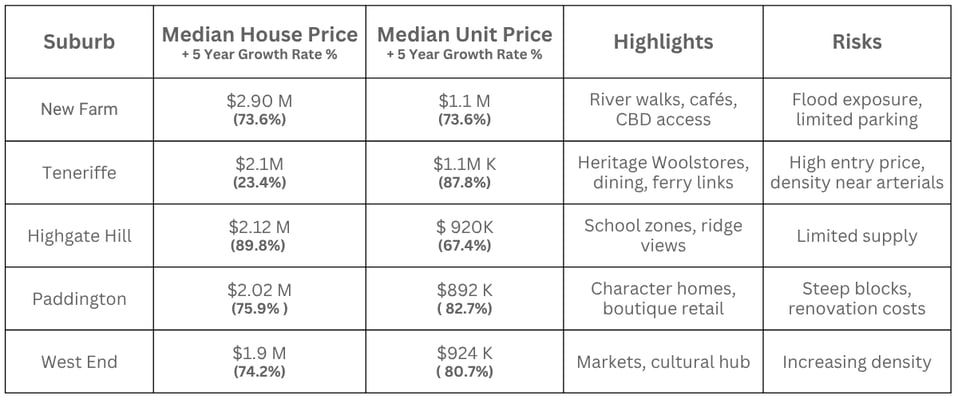
The inner city remains Brisbane’s most connected and dynamic hub. It blends riverside living with fast access to major employment centres, boutique dining, and cultural amenities. Demand stays strong among professionals seeking convenience and investors looking for rental resilience.
Key Suburbs to Watch: New Farm, Teneriffe, Highgate Hill, Paddington, West End
Northside Brisbane
The north blends leafy living with convenience. Easy access to the airport, CBD, and tunnels attracts professionals and families.
Key Suburbs to Watch: Wilston, Wavell Heights, Nundah, Stafford, Kedron
.jpg?width=960&height=400&name=Hunter%20Gather%20%20Table%20%20(1).jpg)
Southside Brisbane
A mix of family lifestyle, strong schools, and proximity to hospitals defines the south. Balanced demand supports consistent growth.
Key Suburbs to Watch: Camp Hill, Coorparoo, Tarragindi, Holland Park, Mount Gravatt
%20(3)-1.jpg?width=952&height=399&name=Gather%20(1200%20x%20500%20px)%20(3)-1.jpg)
East Brisbane and Bayside
The east delivers lifestyle, water views, and weekend markets. Access to train and ferry networks adds value.
Key Suburbs to Watch: Bulimba, Hawthorne, Wynnum, Manly, Birkdale
.jpg?width=959&height=400&name=Hunter%20Gather%20%20Table%20%20(2).jpg)
Western Brisbane and Growth Corridors
Leafy foothills meet emerging growth hubs. Space, schools, and access to nature shape demand.
Key Suburbs to Watch: Indooroopilly, Chapel Hill, Kenmore, Brookfield, Springfield Lakes
.jpg?width=957&height=399&name=Hunter%20Gather%20%20Table%20%20(3).jpg)
North vs South vs East vs West Brisbane: What Fits You Best
Every side of Brisbane offers something distinct. From the north’s elevated outlooks to the bayside’s coastal calm, the city’s layout creates four clear lifestyles. Understanding how these regions differ helps buyers narrow their search and choose where they’ll feel most at home.
North Brisbane: Established, Family-Focused, and Accessible
The north blends leafy streets with connectivity. Proximity to the airport, tunnels, and major employment hubs makes it popular with professionals and families who want stability and convenience. Median house prices hover around $1.2–$1.85 million, with strong buyer competition in Wilston, Wavell Heights, and Nundah.
Homes here are typically Queenslanders or post-war brick builds with modern upgrades. Buyers value the mix of reputable schools, village cafés, and transport options. It suits households who want easy access to the city without sacrificing a community feel.
South Brisbane: Lifestyle Balance and Long-Term Value
The south offers a balanced lifestyle where family-friendly amenities meet strong long-term investment potential. Prices generally range between $1.3–$1.7 million for houses in Coorparoo, Holland Park, and Camp Hill, supported by proximity to hospitals, schools, and shopping centres.
The demographic mix leans toward professionals, young families, and upsizers seeking a lifestyle without the inner-city price premium. Character homes on quiet, tree-lined streets dominate the landscape, and planned infrastructure upgrades are expected to maintain steady growth.
East Brisbane and Bayside: Scenic, Relaxed, and Premium
The east and bayside corridor attracts those seeking space, sea breezes, and weekend leisure. Areas like Bulimba, Manly, and Birkdale combine high amenity with a relaxed lifestyle. Median prices range from $1.2–$2.4 million, reflecting coastal proximity and limited supply.
Buyers here often prioritise lifestyle over commute time, valuing parks, marinas, and cafés that foster a strong community feel. While some pockets carry flood or storm exposure, the demand for lifestyle suburbs continues to drive healthy growth across this region.
West Brisbane: Green, Spacious, and Growing
Western Brisbane appeals to buyers wanting space, privacy, and access to nature. Suburbs like Chapel Hill, Kenmore, and Brookfield offer larger blocks, good schools, and a peaceful atmosphere. Median house prices sit between $1–$2 million, supported by low density and consistent demand.
This region’s character is defined by leafy outlooks and lifestyle homes rather than density or rapid turnover.
Buyers here tend to be established families seeking a long-term base rather than investors chasing short-term gains. Infrastructure projects toward Ipswich and Springfield continue to improve connectivity and future appeal.
Price Gradient Snapshot (Approximate Q3 2025)
-1.jpg?width=960&height=400&name=Hunter%20Gather%20%20Table%20%20(4)-1.jpg)
Suburb Comparisons by Buyer Type
Every buyer approaches the Brisbane property market differently. Some want affordability and growth, others prioritise lifestyle and schools.
To make the choice easier, we group key suburbs by buyer type, helping you match where you are in life with where your next move should be.
First-Home Buyers
Getting into the market often means balancing price and position. Brisbane’s middle and outer rings offer realistic entry points without sacrificing convenience.
Recommended Suburbs:
- Mount Gravatt: Median house $1.22M. Close to schools, the university, and shopping. Solid long-term growth with a strong rental base. Watch for increasing density near retail zones.
- Stafford: Median house $1.1M. Central north position with consistent buyer demand. Traffic along main roads can affect resale appeal.
- Nundah: Median house $1.34M. Good public transport and café culture. Aircraft noise is a consideration near the airport corridor.
- Birkdale: Median house $1.2M. Bayside location with family amenities and quick sales turnover. Train line proximity can affect certain pockets.
Tip: Focus on suburbs where infrastructure is expanding and price growth is steady, not volatile.
Young Professionals
Professionals value proximity to the CBD, access to entertainment, and low-maintenance living. Inner and near-inner suburbs provide the best mix of culture, cafés, and commute ease.
Recommended Suburbs:
- West End: Median unit $830K. Trendy lifestyle hub with cultural amenities. Expect limited parking and increasing density.
- Teneriffe: Median unit $1M. Premium apartment market with strong rental demand. Entry prices are high, but rental yields offset holding costs.
- Paddington: Median unit $820K. Character housing and village energy close to the city. Steep blocks may limit extensions or outdoor space.
- Coorparoo: Median unit $725K. Train access and local dining make it a balanced lifestyle suburb. Apartment oversupply may flatten short-term gains.
Tip: Seek walkable locations with stable demand from tenants and owner-occupiers alike.
Families
Family buyers lean toward suburbs with strong schools, green space, and access to everyday convenience. These areas tend to hold their value through all market cycles.
Recommended Suburbs:
- Wilston: Median house $1.85M. Top-tier school catchment and close to the city. Smaller blocks can limit outdoor space.
- Camp Hill: Median house $1.76M. Strong community feel and family services. Main road exposure in certain pockets.
- Holland Park: Median house $1.42M. Access to parks, schools, and hospitals. Growing traffic near key arterials.
- Kenmore: Median house $1.3M. Family suburb with high-performing schools and leafy surrounds. Limited public transport options.
Tip: Prioritise school zones and flood-free positions. These drive value retention and resale demand.
Hunter Gather uses this framework to guide clients through each decision with clarity and direction.
1. List Your Priorities
Start with what matters most. Decide whether lifestyle, schools, commute, or capital growth comes first. Write these in order, as they will shape every suburb comparison that follows.
2. Use Filters to Refine the Search
Apply simple filters to narrow your options. Distance to the CBD, transport access, median price, and property type will quickly reveal which areas align with your goals.
Online suburb tools and heat maps help visualise how far your budget will stretch across Brisbane.
3. Shortlist Potential Suburbs
Once your filters are clear, shortlist three to five suburbs that meet your criteria. Compare their price trends, infrastructure plans, and demographic appeal. We recommend keeping options diverse across regions to identify where true value lies.
4. Visit and Experience the Suburbs
Spend time in each shortlisted area. Walk the main streets, visit local parks, and see how traffic and noise feel during the day. A weekend drive or coffee stop often reveals what data alone can’t—the real rhythm of the neighbourhood.
5. Check Development and Council Planning
Research future infrastructure and zoning. Council development plans can highlight upcoming changes that influence traffic, density, or land value.
Hunter Gather analyses these layers to help clients anticipate shifts before they appear in the wider market.
6. Inspect Properties and Assess Yield
View several properties within your chosen suburbs. Compare how house condition, block size, and street appeal align with price.
For investors, assess rental yield and vacancy rates alongside long-term growth patterns to balance cash flow and capital return.
7. Make Your Decision and Prepare to Act
When a suburb and property meet your criteria, prepare to move decisively. Secure finance pre-approval, confirm due diligence, and engage trusted professionals to complete the purchase. We support buyers through this final stage, ensuring each step aligns with strategy, not impulse.
This process helps buyers approach Brisbane’s market with structure and confidence. When priorities, research, and local insight come together, the path to the right property becomes clear and measurable.
Buyer Tips and Pitfalls to Avoid in Brisbane
Brisbane’s property market can deliver exceptional results for prepared buyers. The difference often lies in understanding how local conditions, property laws, and suburb factors interact.
At Hunter Gather, we guide clients through these details to help them avoid the traps that catch many buyers off guard.
1. Understand Queensland Auction Rules
Buying through auction in Queensland is very different from a private sale. Once the hammer falls, the contract becomes unconditional, meaning finance and inspections must be completed beforehand.
Confidence comes from knowing comparable sales and setting a clear budget, which keeps emotions from leading to overbidding.
2. Look for Off-Market and Early-Release Properties
Many of Brisbane’s best homes never appear on the open market. Off-market properties often come through strong agent relationships or early-release campaigns before public advertising begins.
Working with a local expert helps uncover these opportunities and gives buyers more negotiating power before competition rises.
3. Avoid Overcapitalised Upgrades
Renovations can look appealing, but they do not always create value. Every suburb has a ceiling price, and spending beyond it can reduce future resale potential.
Reviewing recent sales data helps ensure that improvements are practical, not emotional, and in line with what buyers in that area will pay.
4. Assess Environmental and Flood Risks
Flooding remains one of Brisbane’s most important property considerations. Checking council flood maps, zoning overlays, and building reports helps identify any exposure before purchase.
Awareness of bushfire, noise, and environmental overlays ensures the property remains both safe and sustainable for long-term ownership.
5. Know When to Engage a Buyer’s Agent
Expert help can make the process faster and more strategic. A buyer’s agent conducts research, verifies due diligence, and negotiates with clarity.
This support is particularly valuable for interstate buyers or those competing for high-demand suburbs, where access and timing make a clear difference.
6. Time the Market with Strategy, Not Emotion
Market timing is less important than buying well. Understanding Brisbane’s property cycle and focusing on personal readiness leads to stronger outcomes.
We advise clients to buy when the right property aligns with budget and goals, rather than waiting for the perfect moment that rarely arrives.
7. Stay Ahead of the Market
Information moves quickly, and the best buyers move with it. Setting up alerts, tracking new listings, and following council announcements all help identify opportunities early.
Our on-ground network keeps clients informed about market shifts, new developments, and listings that others might miss.
Find the Right Suburb with Confidence
Brisbane rewards buyers who act with clarity and purpose. Opportunity is everywhere, but only those who plan, prepare, and move strategically turn it into lasting success.
The difference between a good purchase and a great one lies in knowing exactly where to look and when to act.
Every suburb holds promise, but the best outcomes belong to buyers who match data with insight.
Hunter Gather helps you see the city through an expert lens, uncovering value others overlook and guiding each decision with precision and local experience.
If you’re ready to buy smarter, move faster, and secure your ideal property in Brisbane’s most promising suburbs, act now.
Contact us to start your strategy session with Hunter Gather and take the first step toward a confident, successful purchase.

More insights
Is a Buyer’s Agent Worth It? A Guide to When You Should (or …
Buying a home should feel exciting, but for many, it becomes stressful and uncertain. Insp…
GATHER Property Launches GATHER Money in Strategic Partnersh…
Brisbane, Australia – GATHER Property, one of Australia's leading investment-focused buyer…
Brisbane Suburbs with the Best Schools in 2025: A Complete G…
Start with the full guide: the 12 best suburbs in Brisbane for a forever home, with curren…
What Will Happen to Property Prices in Brisbane in the Next …
What will happen to Brisbane property prices over the next five years? Buyers and investor…